

Home Blog

Google Ads for Doctors SEO: Digital Growth Guide

Introduction

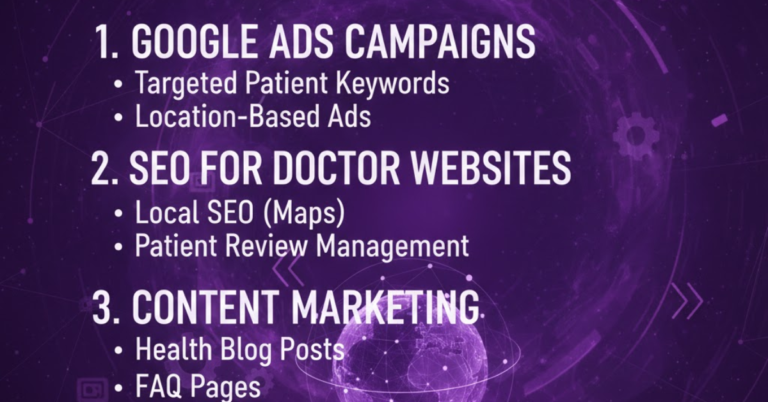
In the modern healthcare landscape, a robust digital presence is no longer optional for private practices and hospitals. Patients increasingly turn to search engines to find medical providers, research symptoms, and book appointments. To stand out in a crowded marketplace, healthcare professionals must employ a dual strategy that combines immediate visibility with long-term organic authority. This comprehensive approach involves leveraging paid search campaigns to capture high-intent traffic while simultaneously optimizing the website to rank higher in organic search results. Understanding the synergy between google ads for doctors seo is crucial for maximizing return on investment and building a sustainable patient base.

This guide explores the foundational elements required to establish a dominant online presence. It covers technical website optimization, local search strategies, content marketing tailored to patient education, and the nuances of running compliant paid campaigns. By integrating these strategies, medical practices can ensure they are visible at every stage of the patient journey, from initial research to final decision-making. The goal is to create a digital ecosystem that not only attracts new visitors but also builds trust and credibility, turning searchers into loyal patients.


Building a Trustworthy Practice Foundation

The foundation of any successful medical digital strategy is a website that conveys professionalism and trustworthiness. Patients are evaluating a practice based on the quality of their digital storefront; therefore, the site must be user-friendly, fast, and secure. A secure site is absolutely essential, as healthcare involves sensitive data. Furthermore, the website needs to clearly communicate the practice’s expertise, showcasing the medical professionals’ credentials and specializations.

Patient testimonials and case studies should be featured prominently to build social proof. It is important to ensure all content adheres to privacy regulations, presenting information in an accessible, empathetic tone. The structure of the site should allow patients to find information quickly, such as office hours, location, and services offered. A clear call to action on every page encourages users to take the next step, whether it is calling the office or booking an appointment online. Investing in a high-quality website reduces bounce rates and sets the stage for successful marketing campaigns.

Localized Visibility Strategies for Healthcare

For most medical practices, capturing local search volume is the most effective way to drive new patient appointments. This requires a comprehensive approach to local listing management and ensuring that location-based queries are targeted effectively. A complete and optimized listing in local directories is crucial, ensuring that the practice’s name, address, and phone number are consistent across the web. This consistency helps search engines verify the legitimacy of the practice and improves its chances of appearing in local map packs.

Localized content is also essential. Creating pages that highlight specific services within particular neighborhoods or regions can improve visibility for hyper-local searches. Additionally, actively managing patient reviews on these local platforms not only improves credibility but also signals relevance to algorithms. Responding to reviews, both positive and negative, shows engagement and a commitment to patient satisfaction. This focus on local search ensures that when residents in the immediate vicinity look for medical care, the practice is among the first options they encounter.

Developing Educational Content That Converts

Educational content serves as the cornerstone for establishing authority and attracting patients who are researching their symptoms. By producing high-quality articles, blog posts, and guides, a practice can demonstrate its expertise while addressing the concerns of its target audience. This content should be patient-centric, focusing on answering questions rather than just promoting services. The goal is to guide visitors through their research process, providing valuable information that builds trust in the provider’s knowledge.

Using data to understand what patients are searching for allows for the creation of content that addresses real needs. This might include explaining complex medical conditions in simple terms, detailing treatment options, or offering preventative health tips. Furthermore, this educational material should be optimized to rank for specific terms, ensuring it reaches the right audience. Including clear calls to action within this content can seamlessly transition readers from researchers to patients. This strategy not only improves visibility but also positions the practice as a reliable resource in the healthcare field.

Technical Optimization for Performance

The technical performance of a medical website directly impacts its ability to rank and convert visitors. A site that loads slowly or is difficult to navigate on mobile devices will frustrate users and be penalized by search engines. Technical optimization involves minimizing image sizes, leveraging browser caching, and ensuring clean, efficient code. For doctors, mobile responsiveness is particularly critical, as many patients search for medical information on their smartphones while on the go.

Another crucial aspect is implementing structured data markup, which helps search engines understand the context of the website’s content, such as doctor profiles, practice locations, and patient reviews. Security is also paramount, and ensuring the website has an active SSL certificate is mandatory. Regular technical audits can identify broken links, crawl errors, or other issues that might hinder search performance. By ensuring the technical foundation is flawless, a practice ensures that all other marketing efforts are not wasted on a site that cannot perform well.

Patient Engagement Through Strategic Outreach

Moving beyond search, patient engagement through email newsletters and targeted outreach can keep a practice top-of-mind for current and past patients. This is not about spamming but about delivering value directly to the patient’s inbox. Personalized content, such as wellness tips, updates on practice services, or reminders for preventative check-ups, helps build a lasting relationship. This direct communication channel ensures patients feel valued and informed, increasing the likelihood of retention and referrals.

Strategic outreach also involves engaging with the community through educational seminars, health fairs, or partnerships with local organizations. These activities not only provide direct value to the community but also build brand awareness and enhance the practice’s reputation. Social media platforms can also be used to share educational content, showcase the office environment, or introduce staff members. A consistent and engaging outreach strategy reinforces the online efforts, creating a holistic approach to patient acquisition and retention that bridges the gap between digital and physical interaction.

Compliance and Ethical Marketing Practices

Marketing in healthcare requires strict adherence to ethical guidelines and legal regulations. Unlike traditional consumer products, medical advertising must be accurate, non-deceptive, and protective of patient privacy. This means avoiding false promises of cures or guaranteed results, and ensuring all content is verifiable and scientifically backed. Practices must also comply with data protection regulations, ensuring that any patient information collected online is stored and handled securely.

Ethical marketing also involves transparency in pricing and treatment options, allowing patients to make informed decisions without feeling pressured. Furthermore, ensuring that all digital platforms are accessible to people with disabilities is not just ethical but also a legal requirement in many jurisdictions. By prioritizing integrity and compliance, a practice builds long-term trust with its patients and avoids legal pitfalls. This commitment to ethical standards is essential for maintaining a positive reputation in the community and ensuring longevity in the highly regulated healthcare industry.

Data Analysis and Continuous Improvement

The digital marketing landscape is dynamic, requiring constant monitoring and adjustment to ensure optimal performance. Analyzing data from both website analytics and campaign dashboards is essential for understanding what is driving results. This involves tracking key metrics such as click-through rates, conversion rates, and patient acquisition costs. By identifying which keywords, ads, or content pieces are performing best, a practice can allocate its budget more effectively and refine its strategy for better outcomes.

Continuous improvement also means staying updated with changes in search engine algorithms and industry trends. Regularly auditing the strategy and testing new approaches ensures that the practice remains competitive. This data-driven approach removes guesswork, allowing for decisions based on concrete evidence of what works. Furthermore, soliciting patient feedback about their digital experience can provide qualitative data to supplement quantitative analytics. This commitment to ongoing optimization ensures that the digital strategy evolves alongside the needs of the patients and the goals of the practice.

Marketing Performance Overview

Metric Google Ads (Paid) Organic SEO (Earned)
Speed to Results Immediate Long-term (Months)
Cost Structure Cost per Click (Variable) Investment in Content/Tech
Visibility Top of Page (Sponsored) Below Ads / Local Maps
Sustainability Stops when budget ends Lasting authority

Frequently Asked Questions

What is the best way to start marketing a new medical practice?

Begin by building a robust, secure website and setting up a verified Google Business Profile. Combine local optimization with targeted paid campaigns to generate immediate visibility while organic efforts take time to build.

How can I ensure my ads are compliant with medical regulations?

Avoid making guaranteed claims about results. Ensure all ad copy is truthful, supported by evidence, and adheres to the specific guidelines of platforms like Google, as well as local healthcare regulations.

Is SEO worth the investment for doctors?

Yes, it is essential for long-term sustainability. While paid ads provide quick traffic, organic visibility builds credibility and reduces the cost per acquisition over time.

How do I track if my marketing is actually bringing in patients?

Use tools like Google Analytics to track website conversions (phone calls, form submissions) and implement call tracking to attribute appointments directly to specific ads or search terms.

Conclusion

Combining paid search campaigns with organic optimization efforts is the most effective way to ensure a medical practice remains visible, credible, and competitive in a digital-first world. By mastering the synergy between google ads for doctors seo, practices can achieve immediate results while building a foundation for long-term patient acquisition and trust. This dual approach allows for flexibility in budgeting and strategy, ensuring that marketing efforts can be adjusted based on real-time performance data and patient needs. The investment in a professional digital presence is a critical component of modern healthcare administration.

Ultimately, the goal of these digital strategies is to provide a seamless experience for patients seeking care, making it easier for them to find, trust, and choose a specific provider. From ensuring technical performance and local visibility to crafting educational content and adhering to ethical standards, every element plays a role in building a reputable practice. Continuous analysis and refinement of these tactics will ensure that the practice not only attracts new patients but also fosters long-term relationships, contributing to the overall success and growth of the medical entity.

Understanding SEO Instant Appear Highsoftware99.com

0

Introduction

In the fast-paced digital marketplace, achieving top-tier search engine visibility is often the differentiator between industry leaders and those struggling to gain traction. The traditional approach to organic growth, while effective, is notoriously slow, frequently requiring months of consistent effort to yield measurable results. This has led to the development of specialized methodologies aimed at accelerating the process, often termed seo instant appear highsoftware99.com. The core objective of this approach is to drastically reduce the time between implementing optimization strategies and witnessing tangible improvements in rankings and traffic volume. It is a pursuit of efficiency, technical precision, and strategic agility.

However, rapid visibility is not about employing illicit shortcuts that risk penalties; rather, it is about capitalizing on technical efficiencies, advanced data analytics, and user experience optimizations that search engines reward immediately. By understanding the intricate mechanisms that govern how content is indexed and ranked, brands can bypass conventional bottlenecks. This introduction highlights the necessity of adopting a proactive stance in digital visibility. As we explore the various facets of this accelerated methodology, it becomes clear that modern success is reserved for those who can marry technical soundness with high-value content, ensuring that their brand not only appears quickly but maintains its position through sustained relevance.

Accelerating Indexing through Technical Integrity

The speed at which a website becomes visible in search results is heavily dependent on how quickly search engine bots can crawl and index its content. A technically sound website provides a clear map for these bots, reducing the time they spend navigating the site and allowing them to focus on the valuable information within. This involves ensuring a clean XML sitemap is promptly submitted to search engine consoles and that the robots.txt file is correctly configured to allow access to essential pages. When the technical infrastructure is robust, the lag time between publishing content and it appearing in search results is significantly minimized.

Furthermore, leveraging modern server technologies to improve response times can directly impact how frequently bots revisit a site. A faster site allows bots to crawl more pages in a shorter period, increasing the likelihood of rapid indexation. Implementing structured data markup also plays a crucial role, as it provides bots with explicit clues about the meaning of a page’s content, allowing for better categorization and faster inclusion in relevant search results. Technical integrity is the first step toward achieving the speed required for modern visibility, ensuring that the foundation is strong enough to support rapid indexing efforts.

Enhancing User Experience for Rapid Engagement

Modern search engines place a premium on user experience, using engagement metrics as signals to determine the quality and relevance of a site. Achieving rapid visibility requires a platform that immediately offers value and keeps visitors engaged, as high bounce rates can quickly diminish any gains made in rankings. This involves optimizing the visual layout for immediate clarity and ensuring that the content is easily scannable. By focusing on intuitive navigation and minimizing intrusive elements, brands can ensure that users find what they need instantly, increasing the time spent on the page.

Moreover, the mobile experience is paramount, as a significant portion of searches now originate from handheld devices. A responsive design that adapts seamlessly to different screen sizes is essential for capturing and retaining this audience. Interactivity, measured by how quickly elements respond to user input, also plays a critical role in user satisfaction. A site that feels slow or unresponsive will be abandoned quickly, signaling to algorithms that it is not providing a quality experience. By prioritizing these user experience factors, brands create a positive feedback loop that reinforces their visibility and authority in the eyes of search engines.

Strategic Content Mapping for High Intent

Content is the primary driver of traffic, but its effectiveness is maximized when it is precisely mapped to user intent. Rather than creating generic content, successful strategies focus on answering the specific questions and solving the problems that users are searching for. This requires a deep understanding of the customer journey and the keywords they use at different stages of that journey. By identifying high-intent keywords that indicate a readiness to engage or purchase, brands can create targeted content that appears in search results precisely when users are looking for solutions.

The structure of the content is also important for rapid visibility. Utilizing clear headings, concise paragraphs, and bullet points helps both users and search engines digest the information quickly. Incorporating multimedia elements such as images, videos, and infographics can further enhance engagement and provide alternative avenues for discovery. Consistency is key, but it must be paired with quality; regularly updating content ensures it remains relevant and authoritative. This strategic mapping ensures that the content not only appears quickly but also converts visitors into engaged users, driving long-term value from the rapid visibility gained.

Leveraging Authority for Faster Rankings

Authority is a critical factor in how search engines rank content, and building it quickly is essential for accelerated visibility. One of the most effective ways to establish authority is through the acquisition of high-quality backlinks from reputable websites within the same niche. These links act as digital endorsements, signaling to search engines that the content is trustworthy and relevant. However, the focus must be on relevance and quality over quantity, as a few high-quality links are far more valuable than numerous low-quality ones.

In addition to backlinks, building authority involves creating a consistent brand presence across multiple platforms. This includes active participation in industry forums, contributing guest content to reputable sites, and building a strong social media presence. These activities increase brand recognition and drive traffic, which in turn signals authority to search engines. By proactively building authority, brands can accelerate the process of gaining trust, allowing their content to rank faster and maintain its position against competitors. Authority is not built overnight, but strategic efforts can drastically reduce the time required to establish it.

Optimizing Local Presence for Instant Impact

For businesses with a physical location or those serving specific geographic areas, local optimization is the fastest way to gain visibility. This involves ensuring that the business information is accurate and consistent across all online directories, including maps and local search platforms. A verified and fully optimized listing can appear in search results immediately, providing a direct link to potential customers in the immediate vicinity. This form of rapid visibility is crucial for driving foot traffic and generating immediate leads.

In addition to directory listings, managing customer reviews is vital for local authority. Positive reviews signal to both search engines and potential customers that the business is reputable and trustworthy. Encouraging satisfied customers to leave feedback and responding to all reviews, both positive and negative, helps build this reputation. Creating content tailored to the local community, such as blog posts about local events or partnerships with other local businesses, can further enhance local visibility. Local optimization is a targeted approach that delivers immediate results, making it an essential component for geographically focused visibility strategies.

Data Driven Refinement of Performance

The ability to analyze performance data is what allows brands to refine their strategies and sustain rapid visibility. Advanced analytics tools provide insights into how users are finding the site, what content they are engaging with, and where they are dropping off. By tracking metrics such as traffic sources, conversion rates, and time on page, businesses can identify which tactics are working and which need adjustment. This data-driven approach ensures that efforts are focused on the most effective strategies, maximizing return on investment.

Refinement is an ongoing process, as search trends and algorithm updates can affect visibility. Regularly auditing the site and updating content based on performance data helps maintain high rankings. A-B testing different headlines, calls to action, and page layouts can also yield significant improvements in engagement and conversion rates. By constantly monitoring and refining performance, brands can ensure their visibility is not just rapid but also sustainable. Data analysis turns potential guesswork into a calculated strategy, ensuring long-term success in a competitive digital landscape.

Future Proofing Digital Assets

Digital landscapes are constantly changing, with new technologies and user behaviors emerging regularly. Future proofing involves preparing a digital asset to remain visible and relevant in the face of these changes. This requires adopting a forward-thinking approach that focuses on longevity and adaptability. One key aspect is ensuring the website is structured to be easily updated and expanded, allowing it to adapt to new content formats or navigation structures without a complete overhaul.

Furthermore, keeping abreast of search engine algorithm updates is crucial for maintaining visibility. Acknowledging that the future of search is increasingly conversational and intent-driven means optimizing for natural language queries and structured data. This helps search engines understand the context of the content, ensuring it remains visible in voice searches and AI-powered result summaries. By prioritizing adaptability and focusing on long-term value, brands can ensure their digital assets continue to perform well, providing sustainable visibility in an ever-evolving digital world.

Comparison of Visibility Strategies

Strategy Speed to Visibility Focus Area Impact on Authority
Technical Optimization High Site Speed, Indexing Medium
Content Mapping Medium User Intent, Quality High
Local SEO Very High Geographic Relevance Medium
Link Building Low to Medium Trust, Backlinks Very High
Data Refinement Continuous Performance, ROI High

Asked Questions

What is the fastest way to achieve visibility for a new website?

Technical optimization paired with local optimization (if applicable) and targeted content mapping offers the fastest path to visibility, ensuring the site is quickly indexed and relevant to specific queries.

How does speed affect search engine rankings?

Page speed is a direct ranking factor. Fast-loading sites provide a better user experience, which is rewarded with higher rankings and reduced bounce rates.

Is it necessary to have backlinks for rapid visibility?

While not always necessary for immediate appearance in search results, high-quality backlinks are essential for maintaining and improving rankings over time.

How often should content be updated for maximum visibility?

Content should be reviewed regularly, at least every few months, to ensure it remains relevant, accurate, and aligned with current search trends.

Conclusion

Achieving rapid and sustainable online visibility requires a strategic blend of technical proficiency, high-quality content creation, and meticulous data analysis. By focusing on techniques that facilitate faster indexing and enhance the user experience, businesses can significantly reduce the time required to see tangible results from their digital efforts. This approach, exemplified by methods that prioritize efficiency, ensures that websites not only appear quickly in search results but also provide genuine value to visitors. The digital landscape is highly competitive, and the ability to adapt and refine strategies based on performance data is what separates leaders from followers.

Ultimately, the goal is to build a digital presence that is trusted by search engines and valued by users. This involves a continuous commitment to excellence, from optimizing backend technical elements to crafting engaging frontend content. As search algorithms continue to evolve, prioritizing agility and user-centric design will ensure long-term success. By investing in a comprehensive strategy today, brands can secure their position as authoritative voices in their industry, achieving the visibility needed to thrive in the modern marketplace. The path to visibility is not a straight line, but a process of constant optimization and adaptation.

SEO by highsoftware99.com: Professional Digital Growth Strategies

0

Introduction
In the rapidly evolving world of digital marketing, staying ahead of the curve requires more than just standard optimization; it demands a strategic approach to visibility that captures user attention at the earliest possible stage. Establishing a dominant online presence is increasingly complex as algorithms prioritize user intent, speed, and topical authority. To navigate this landscape, many businesses are exploring specialized frameworks likehttps://seomedialinks.com/wp-admin/post-new.php by highsoftware99.com to accelerate their reach and build a sustainable brand footprint. This methodology focuses on bridging the gap between what users are typing into a search bar and the solutions a brand provides, often emphasizing early discovery signals like search suggestions and predictive text.

The primary goal of any robust digital strategy is to create a seamless journey for the consumer, starting from the moment a query is conceived. By integrating technical precision with a deep understanding of behavioral data, companies can ensure their assets are not only indexed but prioritized by search engines. This introduction serves as a guide to the fundamental pillars of modern optimization—ranging from technical site health to the psychological impact of brand placement. As we delve into the specific components of this framework, it becomes clear that success in today’s market is reserved for those who prioritize clarity, speed, and relevance in every digital interaction.

Understanding Technical Search Infrastructure

The foundation of any successful online asset is its technical architecture. Before a search engine can rank a page, its automated crawlers must be able to access, read, and interpret the content without encountering errors. A well-optimized technical infrastructure includes a clean sitemap, efficient robots.txt configurations, and a logical URL structure. When these elements are in place, the site becomes more transparent to algorithms, facilitating faster indexing. This clarity is essential for any brand looking to establish a foothold in competitive niches where every second of downtime or crawl error can result in lost traffic and revenue.

Beyond simple accessibility, server-side performance plays a massive role in how a site is perceived by search engines. High-performance hosting, efficient use of content delivery networks, and minimized script execution times contribute to a stable environment. A site that is technically sound provides a reliable canvas for all other marketing efforts. Without this strong base, even the highest quality content may struggle to reach its target audience. Ensuring that the backend is as polished as the frontend is a non-negotiable step in building a resilient digital presence that can withstand the frequent updates and shifts in search engine priorities.

The Role of Speed and Interactivity

User experience has become a primary ranking factor, with a heavy emphasis on how quickly a page becomes interactive. In an age where attention spans are measured in seconds, a slow-loading website is a significant liability. Optimizing for speed involves more than just shrinking image sizes; it requires a holistic look at how code is delivered to the browser. By prioritizing the loading of visible elements and deferring non-essential scripts, developers can create a perceived speed that keeps users engaged. This immediate responsiveness reduces bounce rates and signals to search engines that the site provides a high-quality experience.

Interactivity is also measured by how stable the page elements are as they load. If a user attempts to click a button only for the layout to shift suddenly, it creates a frustrating experience that can lead to a negative perception of the brand. Maintaining visual stability and quick input response times are hallmarks of a professionally managed site. When users find a site easy to navigate and quick to respond, they are more likely to stay longer, explore more pages, and eventually convert. This focus on performance metrics is a vital part of staying competitive in a mobile-first world where performance is often the deciding factor for visibility.

Aligning Information with Search Intent

Content is the primary vehicle for delivering value, but its effectiveness depends entirely on its alignment with what the user is actually seeking. Modern optimization has moved away from simply targeting words toward understanding the intent behind a query. Whether a user is looking for information, trying to find a specific website, or ready to make a purchase, the content must be tailored to meet that specific need. This requires a strategic mapping of information across the site to ensure that every page serves a clear purpose in the customer’s decision-making process.

By analyzing the types of results that search engines currently favor for a specific topic, creators can identify the most effective format for their own material. Sometimes a detailed guide is necessary, while other times a concise list or a video may be more appropriate. Providing the right information in the right format at the right time is the key to building authority. When a brand consistently answers the questions of its target audience, it earns trust and establishes itself as a leader in its field. This commitment to meeting user intent is what turns casual searchers into loyal followers and long-term customers.

Building Trust through Digital Endorsements

The authority of a website is often judged by the quality of other sites that reference it. These digital endorsements, often in the form of links, tell search engines that your content is valuable and trustworthy. However, the focus has shifted from the quantity of these connections to their relevance and reputation. A single link from a well-established industry authority is worth far more than hundreds of links from unrelated or low-quality sources. Building a natural and diverse profile of these endorsements is a long-term project that requires genuine networking and the creation of high-quality, shareable assets.

To attract these valuable connections, a brand must produce original, insightful, and helpful content that others in the industry want to cite. This could include original research, unique data visualizations, or comprehensive industry reports. When you provide a resource that is genuinely useful, the digital community will naturally begin to link to it. Engaging in ethical outreach and fostering relationships with other creators also helps in building this network of trust. A strong profile of endorsements not only improves search standings but also drives direct referral traffic from other reputable platforms, expanding the brand’s reach even further.

Strategies for Predictive Search Placement

One of the more modern aspects of digital visibility involves appearing in search suggestions before a user even finishes their query. This predictive placement acts as a powerful psychological endorsement, suggesting to the user that a brand is a popular or “official” answer to their question. Influencing these signals requires a combination of brand awareness and consistent search volume for specific terms. When a brand name becomes synonymous with a particular service or product, search engines are more likely to suggest it as part of the autocomplete function.

This approach focuses on the “discovery” phase of the search process. By ensuring that a brand is frequently searched for in conjunction with specific keywords, businesses can increase their visibility in the search bar itself. This requires a multi-ordained approach that includes social media engagement, press releases, and traditional marketing to drive brand-specific searches. While this is a more advanced tactic, it can provide a significant advantage by capturing the user’s attention at the very beginning of their journey. Being suggested by the search engine itself provides an immediate layer of credibility that is difficult to achieve through standard results alone.

Optimizing for Handheld and Local Context

As the majority of searches now take place on mobile devices, the context of the user has changed. People searching on their phones are often looking for immediate answers or local services while on the move. This makes mobile optimization and local presence essential components of a modern strategy. A site must be easy to navigate with a thumb, with clear buttons and readable text on small screens. Furthermore, local optimization ensures that a business appears in map results and local directories, which is critical for driving physical foot traffic or service calls in a specific region.

Consistency across the web is vital for local success. Ensuring that the business name, address, and phone number are identical on every platform helps search engines verify the legitimacy and location of the company. Encouraging satisfied customers to leave reviews on local platforms also builds social proof and improves local visibility. When a business is easy to find and highly rated in its local area, it gains a significant advantage over competitors who may have a national presence but lack local relevance. This targeted approach ensures that the brand is visible to those most likely to engage with it in the real world.

The Evolution of Content and Media

The way we consume information is changing, with a growing preference for visual and interactive media over static text. Integrating videos, infographics, and interactive elements into a website can significantly increase user engagement and time spent on the page. These media formats allow for more complex ideas to be communicated quickly and effectively. From an optimization perspective, including varied media types provides more opportunities to appear in different sections of search results, such as image carousels or video tabs, further increasing the brand’s digital footprint.

However, media must be used strategically to avoid compromising site performance. This means using modern file formats, implementing lazy loading, and providing text-based alternatives like transcripts and alt-text. These steps ensure that the content is accessible to all users and understandable by search engine algorithms. By balancing rich, engaging media with technical efficiency, a brand can create a compelling experience that keeps users coming back. As search engines become better at interpreting the content of images and videos, the role of media in driving visibility will only continue to grow, making it a critical area for future investment.

Strategy Comparison Table

Component Primary Goal Focus Area
Technical Setup Fast Indexing Site speed, sitemaps, and clean code
Content Creation User Retention Solving problems and answering queries
Backlink Profile Establishing Trust Quality endorsements from high-authority sites
Mobile UX Accessibility Responsive design and touch-friendly navigation
Predictive SEO Brand Discovery Influencing autocomplete and search suggestions
Local Presence Regional Growth Citations, map results, and customer reviews

Frequently Asked Questions

What is the core philosophy of seo by highsoftware99.com?

The core philosophy is centered on rapid visibility and intent-based structure. It combines traditional optimization with modern signals to ensure a brand is visible from the moment a user starts typing into a search engine.

How long does it take to see improvements in visibility?

While some technical improvements can show results in a matter of weeks, a comprehensive strategy typically takes three to six months to fully mature. Sustainable growth requires consistent effort in content creation and authority building.

Can a website rank well without mobile optimization?

In the current digital environment, it is highly unlikely. Most search engines use mobile-first indexing, meaning they primarily evaluate the mobile version of a site for ranking purposes.

Why are search suggestions important for my brand?

Search suggestions act as a psychological shortcut for users. If your brand appears in the autocomplete bar, it gains immediate credibility and is more likely to be clicked on before the user even sees the full results page.

Conclusion

In summary, achieving long-term success in the digital space requires a multifaceted and disciplined approach. By utilizing the principles of seo by highsoftware99.com, businesses can build a presence that is both technically sound and highly relevant to their target audience. The journey toward high visibility begins with a rock-solid technical foundation, followed by a commitment to producing content that genuinely serves the needs of the user. As we have explored, modern optimization is no longer just about keywords; it is about building a brand that search engines and users can trust.

Staying ahead of the competition also means embracing new technologies and strategies, such as predictive search placement and mobile-first design. These elements ensure that a brand remains visible even as user habits and search algorithms continue to evolve. Ultimately, the most successful digital assets are those that prioritize the user experience at every turn, from the speed of the page to the clarity of the information provided. By remaining adaptable and data-driven, any organization can carve out a significant space for itself in the online world. The digital future belongs to those who are willing to invest in their visibility today, creating a foundation that is resilient, authoritative, and ready for growth.

saas seo agency – Scale Your Software Growth in 2026

0

Introduction

In the hyper-competitive world of software as a service, the path to sustainable scaling is built on organic discoverability. Unlike traditional e-commerce or lead generation, the software sector operates on a subscription model where the cost of customer acquisition must be carefully balanced against long-term lifetime value. As we move through 2026, relying solely on paid acquisition has become prohibitively expensive for many startups and established enterprises alike. This economic shift has highlighted the critical role of a specialized saas seo agency in building an engine for compounding growth. By focusing on the unique nuances of the software buyer’s journey, these experts turn search engines into a predictable pipeline for new signups and demos.

The complexity of software marketing lies in the diverse stages of user awareness. Potential customers range from those who do not yet realize they have a problem to those actively comparing your features against a direct competitor. A strategic saas seo agency understands that success requires more than just ranking for broad industry terms. It involves a sophisticated integration of technical site health, product-led content, and authoritative link building. This holistic approach ensures that a software brand remains visible at every touchpoint, from the initial research phase to the final decision. This introduction explores the specialized frameworks that allow software companies to dominate their niche and achieve a dominant market position.

Mastering Product Led Content Distribution

At the heart of any modern software growth strategy is the concept of product-led content. This methodology focuses on creating educational resources that naturally integrate the software as the primary solution to a specific user problem. Rather than producing generic articles, the goal is to show the product in action through tutorials, use-case studies, and workflow optimizations. This approach helps potential users visualize the value of the tool before they ever sign up for a trial. By positioning the software as a helpful assistant in the user’s daily tasks, a brand can build immediate trust and authority.

Distributing this content requires a deep understanding of where your target audience spends their time. It is not enough to simply publish on a blog; the information must be formatted for various platforms, including community forums, professional networks, and video hubs. High-quality documentation and “how-to” guides often serve as the most effective entry points for new users. When content is genuinely useful and addresses specific pain points, it earns natural backlinks and social shares, further boosting the site’s overall standing. This virtuous cycle of value and visibility is what allows software companies to maintain high rankings in a crowded marketplace.

Architecting Technical Excellence for Software Sites

The technical foundation of a software website is often more complex than a standard blog or storefront. Many platforms feature dynamic content, user-generated sections, and intricate pricing pages that require careful management to ensure proper indexing. Technical excellence involves optimizing the site architecture so that search engine crawlers can easily understand the relationship between different product features and solutions. This clarity is essential for appearing in specialized search results and snippets that drive high-intent traffic. A focus on clean code and efficient site structure is the bedrock of digital performance.

Furthermore, site speed and visual stability are non-negotiable in the software world. Users expect a high-tech brand to have a high-performing website. If a marketing site is slow or unresponsive, it reflects poorly on the product itself. Implementing modern performance standards, such as core web vitals, ensures that the user experience is seamless across all devices. Regular audits are necessary to identify issues like “crawl traps” or excessive script execution that could hinder the site’s performance. By maintaining a flawless technical environment, a company demonstrates its commitment to quality and innovation, which are key drivers of user confidence.

Capturing Intent through Strategic Keyword Mapping

Keyword strategy in the software sector must be as dynamic as the products themselves. It involves moving beyond high-volume terms to target specific, high-intent queries that indicate a readiness to buy. This includes terms related to “software vs competitor,” “alternative to,” and “best tools for.” Mapping these keywords to the appropriate stages of the funnel ensures that the marketing team is not just driving traffic, but driving the right kind of traffic. By capturing users who are in the middle of a decision-making process, a brand can significantly improve its conversion rates.

Advanced mapping also involves identifying “pain point” keywords—queries that describe a problem without naming a solution. For example, a user might search for “how to automate monthly reporting” rather than “reporting software.” By creating content that addresses these specific frustrations, a brand can introduce its product as the ideal solution early in the buyer’s journey. This proactive approach allows for a more personalized marketing experience, as the content can be tailored to the specific needs and industry of the searcher. Continuous refinement of this map based on real-time data ensures that the strategy remains aligned with evolving market demands.

Building Authority through Niche Connectivity

In the software ecosystem, authority is earned through the quality of your digital relationships. This involves securing endorsements and backlinks from reputable technology publications, industry influencers, and developer communities. A link from a trusted review site or a mention in a major tech journal acts as a powerful signal of credibility to both users and search engines. Building this network requires a dedicated outreach strategy that focuses on providing value to the community, such as contributing original research, open-source tools, or expert commentary on industry trends.

Connectivity also extends to integrations and partnerships. When your software is listed in the app marketplaces of other major platforms, it creates a web of authority that is difficult for competitors to displace. These “ecosystem links” are highly valuable because they are contextually relevant and drive qualified referral traffic. A diverse backlink profile, built on a foundation of genuine partnership and expertise, creates a resilient online presence. This long-term commitment to authority building ensures that the brand remains a recognized leader in its field, even as new competitors enter the market.

Optimizing the User Journey for Conversion

The ultimate goal of a software website is to turn a visitor into a user. This requires a seamless transition from the informational content of a blog to the transactional intent of a pricing or signup page. Optimizing the user journey involves using clear, persuasive calls to action and reducing any friction in the signup process. By analyzing user behavior data, such as heatmaps and session recordings, a marketing team can identify exactly where users are getting stuck and make data-driven adjustments to the layout. A frictionless path to conversion is essential for maximizing the return on marketing spend.

Interactive elements, such as product tours, calculators, or live demos, can significantly enhance the user experience. These features keep users engaged longer and provide immediate proof of value. For example, a “savings calculator” can show a potential customer exactly how much time or money they could save by using the tool. By providing these interactive touchpoints, a brand can build a stronger emotional connection with the user. Continuous testing of different headlines, button placements, and form lengths allows for the ongoing optimization of the conversion funnel, ensuring that every visit has the highest possible chance of resulting in a new customer.

Leveraging Data for Competitive Intelligence

In a market where software features can be quickly replicated, data is the ultimate competitive advantage. Strategic marketing involves monitoring the search performance and content strategies of your closest rivals. By identifying which keywords they are ranking for and where they are getting their backlinks, you can uncover gaps in your own strategy. This competitive intelligence allows for a more agile approach, enabling a brand to pivot its focus toward underserved niches or emerging trends before the competition can react.

Data analysis also provides insights into the “search share of voice” within a specific industry. Understanding how much of the total search traffic you are capturing compared to your competitors helps in setting realistic goals and benchmarks. Advanced tracking tools can segment data by region, device, and user persona, providing a granular view of the market landscape. This level of detail is essential for making informed decisions about product development and marketing priorities. By embracing a culture of continuous measurement and analysis, a software company can stay ahead of the curve and maintain its leadership position in a volatile environment.

Future Proofing Growth with Adaptive Strategies

The software industry is characterized by rapid change, and a digital strategy must be able to adapt to new technologies and shifting user habits. As we look toward the future, the integration of artificial intelligence into search workflows will change how users find and evaluate software. Adaptive strategies involve optimizing for natural language and direct, answer-based queries that are becoming more common with the rise of AI assistants. Staying informed about these technological shifts is vital for ensuring that your digital assets remain accessible and authoritative in the years to come.

Future-proofing also means maintaining a strict commitment to ethical marketing and data privacy. As users become more aware of how their data is used, brands that prioritize transparency and security will earn a significant trust advantage. Building a resilient presence is about more than just current rankings; it is about fostering a lasting relationship with the user base. By combining cutting-edge technical skills with a genuine focus on user value, a software company can build a brand that stands the test of time. A forward-thinking vision, balanced with the agility to respond to immediate changes, is the key to sustained success in the decentralized digital age.

Software Growth Comparison Table

Feature Standard Marketing Approach Strategic Software Approach
Primary Goal Traffic Volume Recurring Revenue (LTV)
Content Type Generic / Informational Product-Led / Use-Case Focused
Technical Priority Basic Tags Architecture & Core Web Vitals
Backlink Strategy Quantity Focused Niche Authority & Integrations
Key Metric Click-Through Rate Trial Signups & Demo Requests

Frequently Asked Questions

Why does a software company need a specialized saas seo agency?

Software marketing involves unique challenges, such as high competition, long sales cycles, and the need to communicate complex value propositions. A specialized agency understands these nuances and can tailor a strategy that focuses on high-intent user acquisition.

How long does it take to see a return on investment?

While technical improvements can show results in a few weeks, building significant topical authority and capturing competitive keywords typically takes 4 to 9 months of consistent effort.

What is product-led growth in the context of search?

Product-led growth focuses on using the product itself as the main driver of customer acquisition. In search, this means creating content that solves problems by showing the user how to use the software to achieve their goals.

Conclusion

The journey toward market leadership for any software company is a continuous process of technical refinement, creative storytelling, and data-driven adaptation. By focusing on the core pillars of product-led content, technical excellence, and strategic authority building, brands can create a digital presence that drives compounding growth. Partnering with a specialized saas seo agency provides the expertise necessary to navigate the unique complexities of the software sector, ensuring that every marketing dollar is spent on activities that lead to measurable increases in recurring revenue. This is the foundation of a truly scalable and resilient business model.

As the digital landscape becomes increasingly saturated with generic content, the value of original, expert-led insights will only grow. Success in 2026 belongs to those who can bridge the gap between complex software capabilities and the simple, human needs of their audience. By prioritizing the user experience and maintaining high standards of editorial and technical integrity, software brands can secure their position at the top of the search results. Ultimately, a well-executed strategy is about more than just being found; it is about providing the trust and value that transforms a curious searcher into a lifelong advocate for your product.

International SEO Agency – Global Growth Strategies 2026

0

Introduction

In the interconnected global economy of 2026, a brand’s growth potential is no longer restricted by geographic borders. However, expanding a digital presence into new territories involves far more than simply translating a website into multiple languages. It requires a sophisticated understanding of regional search behaviors, cultural nuances, and varying technical standards. This is where the expertise of a professional international seo agency becomes indispensable. By navigating the complexities of cross-border optimization, these specialists ensure that a business remains visible and relevant in diverse markets, from the bustling digital hubs of Europe to the rapidly growing mobile-first economies of Southeast Asia.

Strategic global expansion demands a holistic approach that integrates technical precision with localized storytelling. Search engines in different regions prioritize different signals, and a one-size-fits-all strategy often leads to wasted resources and missed opportunities. An international seo agency provides the roadmap for identifying high-value markets and tailoring a digital footprint to meet local expectations. This involves everything from managing hreflang attributes to ensuring that site architecture supports regional domains or subdirectories. As we move deeper into a decentralized digital era, the ability to build a cohesive yet localized online presence is the ultimate competitive advantage for companies looking to lead on a global stage.

Navigating Complex Regional Technicalities

The backbone of any global digital strategy is a technically sound infrastructure that communicates clearly with search engines about which version of a site should be shown to which user. This process involves the meticulous implementation of language and regional tags, which prevent content duplication issues across different versions of the same page. Without this technical clarity, a website may struggle to rank in its intended market, as algorithms might get confused by similar content in multiple languages. A robust backend setup ensures that the right audience reaches the right content every time they perform a search.

Furthermore, the choice of domain structure—whether using country-code top-level domains, subfolders, or subdomains—has significant implications for brand authority and maintenance costs. Each approach offers different benefits in terms of local signals and centralized control. Technical excellence also extends to server locations and content delivery networks, which are crucial for maintaining fast load speeds across vast distances. By prioritizing these structural elements, a business builds a resilient foundation that can support rapid scaling without compromising on performance or user experience in any specific territory.

Cultural Nuances and Linguistic Precision

Translation is only the first step in creating a resonant global presence; the real challenge lies in localization. This involves adapting the tone, imagery, and even the product offerings to align with the cultural values and social norms of each specific market. A direct translation of a marketing slogan might lose its impact or, worse, cause offense in a different cultural context. Effective localization ensures that the brand voice feels native and authentic, building trust with the local audience. This psychological alignment is what transforms a foreign entity into a preferred local choice.

Linguistic precision also applies to how keywords are researched and implemented. Search behavior varies wildly even between countries that speak the same language. For instance, the terms used to search for “mobile phones” in London may differ significantly from those used in New York or Sydney. By identifying these regional variations, a strategist can tailor the content to capture the specific intent of local users. This nuanced approach to language ensures that the brand remains visible for the most relevant queries, driving high-quality traffic that is more likely to engage with the business.

Building Authority through Global Connectivity

In the digital world, authority is often measured by the quality of a website’s relationships with other reputable sources within its specific region. Building a global backlink profile requires a localized outreach strategy that identifies and engages with influential voices in each market. A link from a major news outlet in France carries more weight for a French-speaking audience than a link from a generic global site. Establishing these regional endorsements is critical for signaling to search engines that the brand is a trusted authority within that specific geographic context.

This process often involves collaboration with local influencers, industry publications, and regional directories. By contributing unique insights or original research that is relevant to a specific market, a business can earn high-quality mentions that boost its standing. Connectivity is not just about the number of links but about the relevance and trustworthiness of the connections. A diverse and localized authority profile creates a “moat” around the brand’s digital presence, making it harder for regional competitors to displace its rankings and ensuring long-term visibility across multiple borders.

Optimization for Diverse Search Platforms

While many Western markets are dominated by a single search entity, other regions rely on localized platforms that operate with different algorithmic priorities. For example, navigating the digital landscape in East Asia requires specialized knowledge of platforms like Baidu, Naver, or Yandex. Each of these systems has its own unique requirements for indexing, ranking signals, and technical compliance. A strategy that works for one platform may be completely ineffective for another. Understanding these differences is essential for any brand looking to establish a foothold in these high-growth regions.

Adapting to these diverse platforms often involves localized hosting requirements and specific technical setups to bypass regional firewalls or meet local data regulations. It also requires a different approach to content, as user behavior on these platforms may prioritize different formats, such as short-form video or interactive social elements. By diversifying the optimization strategy to include these regional giants, a business ensures that it is accessible to the widest possible audience. This platform-specific expertise is what allows a global brand to maintain a consistent presence across the entire international digital ecosystem.

User Experience and Mobile First Globalism

In many emerging markets, the internet is synonymous with the smartphone. For these audiences, a desktop-centric website is essentially invisible. A “mobile-first” mindset is mandatory for global success, requiring a focus on lightweight design, fast load times, and intuitive touch navigation. In regions with varying connection speeds, ensuring that a site remains functional even on slower networks is a major competitive advantage. This accessibility demonstrates a commitment to the user’s needs, regardless of their technological constraints or geographic location.

The user experience also includes localized payment gateways, currency conversion, and customer support. If a visitor reaches the checkout page only to find that their preferred local payment method is missing, the entire preceding optimization effort is wasted. Integrating these local transactional elements into the user journey is a critical component of a successful cross-border strategy. By providing a seamless and friction-free experience from discovery to purchase, a brand can significantly increase its conversion rates and build a loyal international customer base that feels valued and understood.

Data Driven Analysis of Global Trends

Managing a global digital presence generates a massive amount of data, which must be synthesized and analyzed to inform future strategy. By monitoring regional performance metrics, a business can identify which markets are over-performing and which require additional investment. This analytical rigor allows for the efficient allocation of resources, focusing on the territories that offer the highest return on investment. Regular reporting across different time zones and languages provides a clear picture of the overall health of the brand’s international growth.

Data analysis also helps in identifying emerging trends before they go global. A shift in consumer behavior in one region can often serve as a leading indicator for other markets. By staying ahead of these trends, a brand can pivot its strategy and maintain its leadership position. This requires the use of advanced tracking tools that can segment data by country, language, and device type. Embracing a culture of continuous measurement and refinement ensures that the global strategy remains agile and responsive to the ever-changing dynamics of the international marketplace.

Future Proofing Cross Border Visibility

The digital world is in a constant state of flux, influenced by new technologies, shifting regulations, and evolving user habits. To remain successful in the long term, a global brand must be adaptable and prepared for change. This involves staying informed about international data privacy laws, such as GDPR or other regional equivalents, to ensure that the site remains compliant in every market. Ethical data management and transparency are becoming major trust signals for consumers worldwide, and businesses that prioritize these values will have a significant advantage.

Future-proofing also involves experimenting with emerging technologies like artificial intelligence and voice search on a global scale. As more users interact with the internet through natural language and AI-driven interfaces, the way information is structured and presented will need to evolve. By proactively adjusting the international strategy to incorporate these innovations, a business can ensure that its digital assets remain discoverable and authoritative. A long-term vision, combined with the agility to respond to immediate shifts, is the ultimate key to sustained global dominance and brand longevity in a decentralized digital age.

Global Growth Performance Table

Strategy Pillar Primary Focus Key Global Metric
Technical SEO Hreflang & Architecture Indexing Rate by Region
Localization Cultural & Language Fit Local Conversion Rate
Authority Regional Backlinks Domain Rating per Market
Mobile UX Speed & Accessibility Mobile Bounce Rate
Analytics Regional ROI Market Share Growth

Frequently Asked Questions

Why can’t I just use auto-translate for my global site?

Auto-translation often misses cultural context and local idioms, which can make your brand look unprofessional or untrustworthy. An international seo agency ensures that the copy is not only accurate but also persuasive and optimized for local search behavior.

Which domain structure is best for international growth?

The “best” structure depends on your resources. ccTLDs (like .fr or .de) offer the strongest local signals, while subdirectories (like /fr/ or /de/) are easier and cheaper to maintain. A specialist can help you weigh these options based on your specific goals.

How does an international seo agency handle different search engines?

They use platform-specific tools and technical setups to ensure compliance with the unique algorithms of engines like Baidu or Yandex, ensuring your brand is visible even in markets where Google is not the primary player.

Conclusion

The transition from a domestic leader to a global authority is a complex journey that requires a blend of technical mastery and cultural empathy. By prioritizing the core pillars of localization, technical infrastructure, and regional authority, businesses can unlock immense growth potential in new territories. Partnering with a specialized international seo agency provides the strategic expertise necessary to navigate these challenges, ensuring that every digital interaction is tailored to the specific needs and expectations of the local audience. This is the foundation of a truly resilient and scalable global brand.

As the digital landscape continues to evolve, the ability to communicate authentically across borders will remain a defining characteristic of market leaders. Success in the global arena is not just about being found; it is about providing the value and trust that turns a foreign searcher into a loyal customer. By investing in a high-quality, data-driven international strategy, companies can secure their place at the forefront of their industry on a worldwide scale. Ultimately, the goal is to build a digital presence that feels local everywhere, ensuring that your message resonates with every user, regardless of where in the world they happen to be.

https://posicionamientoweb.club/herramientas-seo – Top Guide

0

Introduction

In the competitive landscape of digital marketing, having access to the right analytical resources is the difference between stagnation and exponential growth. Navigating the complexities of search engine algorithms requires more than just intuition; it demands precise data and professional-grade utilities. For those looking to master their online presence, the information found at seo provides a comprehensive roadmap. This resource serves as a centralized hub for understanding which platforms can truly move the needle for a website’s visibility. By integrating these specialized assets into a daily workflow, marketers can identify hidden opportunities that others often overlook.

The transition from a basic web presence to a high-ranking authority involves a multi-faceted approach. It requires deep dives into technical health, backlink profiles, and competitive intelligence. Utilizing a curated list such as the one at seo ensures that you are using validated methods to enhance your site’s performance. As search engines evolve into more sophisticated AI-driven entities, the necessity for high-quality data becomes even more critical. This introduction explores how leveraging the right digital assets can transform your strategic outlook and provide a sustainable competitive advantage in an ever-shifting marketplace.

The Foundation of Technical Analysis

Before any content can rank, the underlying structure of a website must be flawless. Technical analysis involves auditing the site’s architecture to ensure that search engine crawlers can efficiently index every page. This process identifies issues such as broken links, duplicate content, and slow-loading scripts that can hinder performance. By focusing on these backend elements, you create a stable environment where your creative efforts can thrive. Without a solid technical base, even the most exceptional content will struggle to reach its target audience, making professional auditing utilities indispensable for any serious webmaster.

Furthermore, a deep technical audit provides insights into mobile responsiveness and core web vitals. As mobile traffic continues to dominate the digital space, ensuring a seamless experience across all devices is a top priority. Modern diagnostic utilities allow you to see exactly how your site renders in different environments, highlighting areas for improvement in real-time. By resolving these friction points, you not only satisfy the requirements of search algorithms but also provide a much better experience for your human visitors. This dual focus on machine and human interaction is the hallmark of a truly optimized digital platform.

Precision in Keyword Intelligence

Understanding the language of your audience is a fundamental requirement for digital success. Keyword intelligence goes beyond simple search volume; it involves uncovering the intent behind the queries. Are users looking for information, a specific product, or a local service? By categorizing terms based on these motivations, you can tailor your content to provide the exact answers your visitors are seeking. This level of precision ensures that the traffic you attract is high-quality and likely to convert, rather than just empty numbers on a dashboard.

Modern intelligence platforms also allow you to track the evolution of search trends over time. This helps in identifying emerging topics before they become saturated by competitors. By being an early mover in a specific niche, you can establish authority and secure long-term rankings with less effort. Additionally, analyzing the terms your competitors are successfully targeting can reveal gaps in your own strategy. This proactive approach to data collection allows for a more agile and responsive marketing plan that adapts to the changing needs of the market in real-time.

Evaluating Domain Authority and Trust

Authority in the digital world is a measure of credibility and influence. It is often determined by the quality and relevance of the external sites that link back to your content. Evaluating your backlink profile is essential for understanding how search engines perceive your trustworthiness. High-quality utilities can help you distinguish between beneficial links that boost your standing and toxic links that could potentially trigger penalties. Maintaining a clean and diverse profile is a continuous process that requires constant monitoring and strategic outreach to reputable industry peers.

Beyond just counting links, it is important to analyze the context in which your brand is mentioned. Are you being cited as an expert source in a major publication, or are you mentioned in a generic directory? The “neighborhood” in which your site resides online significantly impacts your overall trust score. By focusing on building relationships with high-authority domains, you create a halo effect that elevates all of your content. This long-term commitment to quality over quantity is what separates enduring brands from those that rely on short-lived tactics to gain visibility.

Optimizing the User Experience Journey

The interaction between a user and your website is a critical signal of relevance. If visitors find your site difficult to navigate or the information hard to digest, they will quickly return to the search results. Optimizing the user journey involves creating intuitive navigation menus, clear headings, and engaging visual elements that guide the reader through the page. By reducing the “bounce rate” and increasing the time spent on your site, you signal to algorithms that your content is valuable and deserves a higher position in the results.

Interactive features, such as well-organized tables or intuitive contact forms, further enhance this experience. When a user can find exactly what they need without friction, they are much more likely to view the brand favorably. Monitoring heatmaps and user behavior data allows you to see exactly where visitors are getting stuck. This allows for data-driven adjustments to the layout that improve flow and conversion rates. A website that prioritizes the user at every turn will always have a significant advantage over those that focus solely on satisfying the requirements of search bots.

Mastering Competitive Benchmarking

In any market, knowing where you stand relative to your peers is essential for growth. Competitive benchmarking involves analyzing the strengths and weaknesses of the top-ranking sites in your niche. By looking at their content structure, technical performance, and social engagement, you can identify the benchmarks you need to hit or exceed. This is not about copying what others are doing, but about understanding the standard of excellence that the market currently demands. This insight allows you to differentiate your brand by offering something unique and more valuable.

Benchmarking also helps in the efficient allocation of resources. If you find that your competitors are all failing to address a specific customer pain point, you can focus your efforts on filling that gap. This strategic positioning allows you to capture a segment of the audience that is currently underserved. Regular competitive audits ensure that you are never caught off guard by a new entrant or a shift in a competitor’s strategy. By staying informed about the broader landscape, you can maintain your leadership position and continue to grow even in a crowded and noisy marketplace.

The Role of Data Visualization

Raw data can be overwhelming, but when it is transformed into visual formats, it becomes a powerful tool for decision-making. Data visualization allows you to see patterns, trends, and anomalies that would be impossible to spot in a spreadsheet. Whether it is a line graph showing traffic growth over a year or a heat map indicating user engagement on a specific page, these visuals provide immediate clarity. This allows for more effective communication within a team and helps in justifying strategic shifts to stakeholders who may not be well-versed in technical details.

Effective visualization also aids in identifying the return on investment for specific campaigns. By mapping marketing spend against conversion data, you can see exactly which channels are driving the most value. This allows for the continuous refinement of your budget, focusing on the areas that deliver the best results. As the volume of data available to marketers continues to increase, the ability to synthesize and present that information clearly is becoming a vital skill. It turns abstract numbers into actionable insights that drive the business forward with confidence and precision.

Preparing for the AI Search Era

As we move deeper into 2026, the influence of artificial intelligence on how information is retrieved and presented is undeniable. AI-driven search engines prioritize entities and concepts over simple word matching. Preparing for this shift involves optimizing your content for “natural language” and ensuring that your site’s metadata is structured in a way that machines can easily interpret. This includes the use of advanced schema markup to define the relationships between your products, services, and brand identity. Being “AI-ready” is the next frontier of digital excellence.

This transition also means focusing more on “answer-based” content. Many users now interact with search via voice assistants or AI chat interfaces that provide a direct answer rather than a list of links. To remain visible, your content must be concise, accurate, and authoritative enough to be chosen as the primary source for these answers. This requires a high degree of editorial integrity and a commitment to being the most reliable resource in your field. By embracing these technological advancements today, you ensure that your website remains relevant and accessible regardless of how the search landscape changes tomorrow.

Key Resource Comparison Table

Feature Category Basic Utility Focus Advanced Strategic Focus
Technical Health Finding broken links Core Web Vitals & JS rendering
Keyword Data Search volume & CPC User intent & topical gaps
Link Analysis Link counting Trust flow & entity association
UX Monitoring Page views Heatmaps & interaction signals
AI Readiness Meta descriptions Schema markup & entity mapping

Frequently Asked Questions

Why should I use the resources mentioned at https://posicionamientoweb.club/herramientas-seo?

These resources are curated to provide the most accurate data for modern search environments, helping you avoid outdated tactics and focus on what currently drives rankings and conversions.

Is it necessary to use multiple utilities for one website?

Yes, because no single platform can cover every aspect of digital growth perfectly. A combination of technical, keyword, and authority-based utilities provides a more holistic view of your site’s performance.

How often should I audit my website’s performance?

A full technical and competitive audit should be conducted at least once a quarter, while basic metrics like traffic and keyword rankings should be monitored on a weekly basis to catch shifts early.


Conclusion

The journey toward digital dominance is a continuous process of learning, measuring, and adapting. Having a reliable set of guidelines and utilities, such as those discussed at https://posicionamientoweb.club/herramientas-seo, is vital for maintaining a competitive edge. These assets empower marketers to make informed decisions backed by real-time data rather than guesswork. By prioritizing technical health, understanding deep user intent, and building genuine authority, a brand can achieve sustainable growth that withstands the volatility of algorithm updates.

As we look toward the future of the internet, the integration of artificial intelligence and human-centric design will define the leaders of every industry. Success will belong to those who can bridge the gap between complex technical requirements and the simple human need for high-quality information. By investing in the right digital infrastructure today, you are not just optimizing for a search engine; you are building a trusted platform that provides real value to your audience. Ultimately, the goal of any strategic effort is to be found by those who need your services most, and with the right approach, that goal is well within reach.

electrician seo Guide: Master Local Visibility and Leads

0

Introduction

In the highly competitive home services sector of 2026, a digital presence is the lifeblood of business growth. For electrical contractors, the shift from traditional referrals to digital discovery has reached a tipping point where visibility in search results directly dictates the volume of daily service calls. Navigating this landscape requires more than just a functional website; it demands a strategic application of electrician seo to ensure that when a homeowner faces an emergency or plans a renovation, your business appears at the top of their search. This holistic approach integrates geographic relevance with technical excellence to capture high-intent customers exactly when they need professional assistance.

Success in modern search optimization is no longer about tricking algorithms but about demonstrating genuine authority and reliability. As search engines become more adept at understanding user intent and local context, the focus has shifted toward providing a seamless and informative experience. By leveraging the specific frameworks of electrician seo, companies can build a robust online reputation that signals trust to both users and search bots. From optimizing map listings to crafting expert-led content that solves real-world problems, every digital touchpoint serves as an opportunity to convert a searcher into a loyal client. This guide explores the essential components of a high-performing strategy designed to power your business’s digital growth.

Mastering the Local Map Interface

The most immediate opportunity for a service-based business lies within the local map results, often referred to as the map pack. When users search for help with a blown fuse or a vehicle charger installation, they are typically looking for someone in close proximity who can respond quickly. Appearing in these top three positions requires a meticulously managed business profile that includes verified contact details, accurate service hours, and a precise category selection. This digital storefront acts as a primary gatekeeper, offering potential clients essential information at a glance and significantly increasing the chances of an immediate inquiry.

Maintaining this presence involves more than a one-time setup; it requires consistent activity and engagement. Regularly uploading high-quality photos of your team in action, branded vehicles, and completed projects helps to humanize the brand and build trust. Additionally, the use of the updates feature to share safety tips or seasonal maintenance reminders keeps the profile fresh and signals to search engines that the business is active. By treating the map interface as a dynamic extension of the office, contractors can ensure they remain the first choice for residents searching within their specific service radius.

The Influence of Reputation Management

In the trade industries, social proof is the most powerful currency available. Authentic reviews from satisfied customers serve as a public endorsement of a contractor’s skill and professional conduct. Search algorithms place heavy weight on the volume, frequency, and sentiment of these reviews when determining local rankings. A consistent stream of positive feedback not only improves visibility but also reassures prospective clients who are often wary of hiring unknown technicians for critical home repairs. Encouraging every customer to share their experience has become a fundamental pillar of a successful growth strategy.

Effective reputation management also extends to how a business handles criticism. Responding to every review—both positive and negative—demonstrates a commitment to customer service and transparency. When a professional addresses a concern publicly and offers a resolution, it can often turn a negative situation into a testament to the company’s integrity. This level of engagement builds a deeper layer of trust with the community and shows search engines that the business is responsive and accountable. Over time, a robust collection of genuine testimonials becomes a permanent asset that drives conversions more effectively than any advertisement.

Technical Site Health and Speed

A website serves as the digital headquarters for any electrical business, and its technical performance is a critical factor in its ability to rank. Search engines prioritize sites that are secure, fast, and easy to navigate, as these elements contribute directly to a positive user experience. This involves optimizing the backend code, compressing high-resolution images, and ensuring that the site’s architecture is logical and easy for crawlers to index. A technically sound website provides a stable foundation upon which all other marketing efforts are built, ensuring that content is discovered and rewarded by algorithms.

Speed is particularly vital in the service industry, where users are often searching in a state of urgency. If a page takes too long to load on a mobile device, a potential lead will likely bounce back to the search results to find a competitor. Implementing modern performance standards, such as core web vitals, helps to reduce friction and keep visitors engaged. Regular technical audits are necessary to identify broken links, crawl errors, or outdated security protocols that could hinder performance. By prioritizing the “health” of the site, a business demonstrates its reliability and professionalism before a single word of content is read.

Content Strategy for Topical Authority

Establishing authority in the electrical field requires providing content that goes beyond simple service descriptions. Today’s search environment rewards topical depth—the ability to provide comprehensive answers to the questions your audience is actually asking. This involves creating a resource library of blog posts, guides, and FAQ sections that address common pain points, such as “why do my lights flicker?” or “how to prepare for a home generator installation.” By providing expert insights for free, a business establishes itself as a leader in its field long before a contract is signed.

This content-driven approach also creates numerous opportunities for internal linking, which helps search engines understand the relationship between different pages on your site. For example, a blog post about electrical safety can link directly to a service page for panel upgrades. This creates a cohesive user journey that guides visitors from awareness to action. High-quality, original content that avoids generic fluff and focuses on actionable advice is the key to building a “moat” around your digital presence. It ensures that your site remains a valuable destination for users and a high-priority result for search engines.

Mobile Optimization and Interaction

With the vast majority of local searches now originating from mobile devices, a “mobile-first” mindset is no longer optional. A website must not only look good on a smartphone but also be highly functional for someone on the go. This means including prominent, thumb-friendly “click to call” buttons and easy-to-fill contact forms. The goal is to minimize the effort required for a user to get in touch. If a site is difficult to navigate on a small screen, the business is essentially turning away a significant portion of its potential market.

Interaction signals, such as the time a user spends on a page and how many pages they visit per session, are increasingly used to determine relevance. To enhance these signals, the mobile experience should be streamlined and intuitive. Using clear, bold headings and concise paragraphs makes information easy to digest at a glance. Additionally, integrating location-based features, like a map showing your office or service area, provides immediate context for the user. By optimizing for the handheld experience, a business aligns itself with the habits of modern consumers, ensuring it is always ready to capture immediate demand.

Strategic Connectivity and Backlinks

In the digital world, authority is often built through associations with other reputable entities. Backlinks—links from other websites to yours—act as votes of confidence in your expertise. For a local contractor, the most valuable links are those from relevant local sources, such as home improvement blogs, neighborhood directories, or the local Chamber of Commerce. These connections signal to search engines that your business is a trusted part of the local ecosystem. Building this network requires a proactive approach to outreach and a commitment to providing value to the wider community.

One effective way to earn these links is through community involvement and local partnerships. Sponsoring a local sports team or participating in a community event can lead to mentions on various local platforms. Additionally, providing guest expert commentary for regional news outlets or home-owner associations can establish you as a go-to source for electrical information. This organic approach to link building is much more sustainable and resilient than any manipulative tactic. It creates a network of endorsements that reinforces your brand’s credibility and makes it much more difficult for competitors to displace your search standing.

Data Driven Growth and Analysis

Modern marketing is built on the ability to measure, analyze, and refine every action taken. By utilizing advanced analytical tools, an electrical business can gain a clear picture of how users are finding them and what actions they take once they arrive. This data allows for the identification of high-performing keywords and content types, enabling the business to allocate its marketing budget more effectively. Instead of guessing what might work, decisions are based on the actual behavior of the target audience, leading to a much higher return on investment.

Continuous analysis also helps in staying ahead of shifting trends and competitor moves. By monitoring your “share of voice” in local search results and tracking your rankings for key service terms, you can pivot your strategy as needed. Regular reporting ensures that the SEO efforts remain aligned with the broader business goals, such as increasing calls for high-margin services like rewiring or smart home installations. Embracing a culture of data-driven refinement is what separates the market leaders from those who are merely participating, ensuring that the business remains agile and successful in an ever-changing digital environment.

Local Service Performance Table

Strategy Component Primary Focus Key Metric
Map Profile Profile Completeness Map Pack Impressions
Review Strategy Social Proof Average Star Rating
Technical SEO Speed and Security Core Web Vitals Score
Content Depth Topical Authority Average Time on Page
Mobile UX Lead Conversion Click-to-Call Volume

Frequently Asked Questions

How long does it take for these strategies to show results?

While some technical fixes can show improvement in a few weeks, building significant local authority and map rankings typically takes between three to six months of consistent effort.

Why are reviews so important for my ranking?

Reviews are a primary trust signal. Google uses the frequency and sentiment of reviews to determine how prominent a business should be in local results, as it wants to recommend the most reliable options to its users.

Do I need a blog for my electrical business?

A blog is not strictly required, but it is one of the most effective ways to build topical authority and capture “top of funnel” searches from users who are researching a problem before they are ready to hire.

Conclusion

The evolution of the digital marketplace has made a sophisticated online presence a fundamental requirement for any successful electrical contractor. By integrating the core principles of electrician seo into their daily operations, businesses can move beyond basic visibility and achieve a level of market dominance that drives sustainable growth. This journey involves a balanced focus on the technical health of the website, the management of a public reputation, and the creation of authoritative content that serves the needs of the community. It is a long-term investment in the brand’s most valuable digital asset.

As we look toward the future, the importance of authenticity and user-centricity will only continue to grow. There are no shortcuts to building a reputable and visible brand; it requires a dedicated commitment to excellence in every digital interaction. By staying adaptable and prioritizing the needs of the client, electrical businesses can secure their position at the top of the search results for years to come. Ultimately, a well-executed strategy is about more than just rankings—it is about becoming the most trusted and accessible solution for your neighbors in their time of need.

seo-104: Master Advanced Search Optimization Strategies

0

Introduction

In the rapidly maturing digital landscape of 2026, the transition from basic visibility to market dominance requires a sophisticated understanding of search mechanics. While introductory guides often focus on surface-level tactics like meta tags and simple keyword placement, seo-104 represents a shift toward intermediate and advanced methodologies. This framework moves beyond the “what” of search engine optimization and dives deep into the “how” and “why,” focusing on long-term sustainability and alignment with evolving quality guidelines. By mastering seo-104, businesses can move past the plateau of basic optimization and begin to see exponential growth in organic reach and authority.

The core philosophy of seo-104 is built on the integration of technical precision with human-centric value. As search algorithms become increasingly adept at identifying genuine expertise and user satisfaction, the strategies used to reach the top of the results must also evolve. This involves a comprehensive approach that includes everything from advanced crawl budget management to the psychological mapping of searcher intent. Whether you are a small business owner looking to scale or a seasoned marketer aiming to refine your craft, the principles of seo-104 provide the technical and strategic roadmap necessary to navigate the complexities of modern digital growth.

Advanced Technical Infrastructure

Explore

A robust technical foundation is the prerequisite for any high-performing digital asset. In the context of advanced optimization, this means looking beyond simple page speed and focusing on the overall efficiency of the site’s architecture. Strategic technical health involves ensuring that search engine crawlers can navigate the site without friction, which requires a clean URL structure, optimized internal linking, and the elimination of redundant or thin content. When the “bones” of a website are strong, every other marketing effort becomes significantly more effective, allowing content to rank faster and stay visible longer.

Furthermore, technical mastery in 2026 demands a focus on visual stability and interaction readiness, often measured through core web vitals. This includes optimizing how JavaScript and CSS are delivered to ensure that the user experience is seamless across all devices. By prioritizing these backend elements, a site demonstrates to search engines that it is a reliable and high-quality destination. Regular audits are essential to identify and resolve issues like “dead-end” pages or excessive redirects that can dilute the site’s authority. A technically superior site acts as a force multiplier for your entire digital strategy.

Psychological Mapping of Intent

Understanding the specific motivation behind a search query is a hallmark of advanced optimization. While basic strategies target keywords based on volume alone, the advanced approach categorizes queries into informational, navigational, commercial, and transactional intents. By mapping these intents to specific stages of the buyer’s journey, a brand can provide exactly what the user needs at the right moment. This alignment not only improves search rankings but also significantly increases the likelihood of a conversion, as the content directly addresses the user’s immediate problem or question.

Psychological mapping also involves analyzing the “why” behind the search. This means looking at the nuances of language and the types of solutions users are seeking. For example, a search for a “how-to” guide requires a different content format and tone than a search for a product comparison. By tailoring the content to meet these implicit expectations, you create a more satisfying user experience. This focus on intent signals to algorithms that your page is the most relevant answer for a specific group of users, reinforcing your topical authority and driving higher quality traffic to your domain.

Establishing Topical Authority

Topical authority is the measure of a website’s expertise and depth in a specific subject area. Rather than trying to rank for a wide array of disconnected terms, an advanced strategy focuses on becoming the “go-to” resource for a particular niche. This is achieved through the creation of topic clusters—groups of interlinked pages that cover every facet of a subject in great detail. When a search engine sees that a site provides comprehensive, high-quality information across a whole topic, it is much more likely to rank that site for related queries, even those with high competition.

Building this authority requires a consistent commitment to producing high-value content that demonstrates experience, expertise, authoritativeness, and trustworthiness (E-E-A-T). This is not about quantity, but about the quality and originality of the insights provided. By answering complex questions, providing unique data, and offering expert commentary, a brand can distinguish itself from generic competitors. Over time, this cumulative authority creates a “moat” around the brand’s digital presence, making it much harder for newer sites to displace its rankings, regardless of their individual page optimization.

Data Driven Content Refinement

In a world where data is abundant, guessing which content will perform best is no longer necessary. Advanced practitioners use analytical tools to monitor how users interact with their pages in real-time. By tracking metrics such as scroll depth, time on page, and click-through rates, they can identify which sections are resonating and which are being ignored. This allows for a continuous cycle of refinement, where content is updated and improved based on actual user behavior. This iterative process ensures that the website remains a high-performing asset that evolves alongside its audience.

Content refinement also includes “pruning” or updating older material that may have lost its relevance. A site with 50 high-quality, up-to-date pages will often outperform a site with 500 pages of outdated or low-value content. By focusing on the “health” of the entire domain, you ensure that link equity is distributed effectively and that search engines only see the best version of your brand. Using data to guide these decisions helps in maximizing the return on investment for every piece of content produced, making the overall growth strategy more efficient and predictable.

Mastering User Interaction Signals

Search engines are increasingly using behavioral signals to determine the true value of a webpage. If a user clicks on a result but immediately returns to the search page—a behavior known as “pogo-sticking”—it signals to the algorithm that the page did not meet the user’s needs. Advanced optimization focuses on reducing these negative signals by creating engaging, easy-to-read layouts and providing immediate value. This includes the use of clear headings, interactive elements, and multimedia content that keeps the user on the page longer and encourages further exploration of the site.

Improving interaction signals is as much about design as it is about content. For instance, ensuring that the most important information is “above the fold” and that the page loads quickly prevents user frustration. Additionally, a clear internal linking strategy can guide users to related topics, increasing the average session duration. When users consistently spend time on your site and interact with your content, it sends a strong positive signal to search engines that your site is a high-quality resource. This “human” side of optimization is critical for maintaining high rankings in a competitive landscape.

Advanced Outreach and Connectivity

Connectivity is the digital currency of authority. While basic strategies might focus on any available link, the advanced approach prioritizes relevance and trust. This involves building relationships with other leaders in your industry and securing mentions on high-authority platforms that your target audience already trusts. These “digital endorsements” act as powerful signals of credibility. A single link from a highly respected industry publication is often worth more than dozens of links from generic, low-quality sites.

Strategic connectivity also involves participating in the broader industry conversation. This could include contributing guest insights to reputable blogs, being a guest on relevant podcasts, or creating original research that others want to cite. By becoming an active participant in your digital community, you naturally attract high-quality backlinks and brand mentions. This organic growth of your network builds a resilient presence that is not dependent on any single tactic. It creates a web of authority that supports your rankings and enhances your brand’s reputation across the entire internet.

Scaling with AI and Automation

As we progress through 2026, the use of artificial intelligence has become an essential part of scaling advanced optimization efforts. However, the key is using AI for data analysis, pattern recognition, and automation of repetitive tasks rather than just bulk content generation. AI can help identify content gaps, analyze competitor strategies at scale, and even predict future search trends. By leveraging these tools, a small team can achieve the results that previously required an entire department. This efficiency allows for more time to be spent on high-level strategy and creative innovation.

Automation also plays a role in monitoring technical health and reporting. Setting up automated alerts for crawl errors, drops in rankings, or site speed issues ensures that problems are addressed before they impact performance. By integrating these technologies into the workflow, practitioners can maintain a high standard of quality across a large volume of pages. The goal is to use technology to enhance human decision-making, ensuring that every action taken is backed by data and aligned with the long-term goals of the business. This modern approach to scaling ensures consistent growth in an ever-changing environment.

Strategy Tier Comparison

Feature Basic Optimization (101-103) Advanced Optimization (104)
Primary Goal Indexing and Visibility Authority and Revenue
Content Strategy Keyword-focused / Volume Intent-focused / Topical Depth
Technical Focus On-page tags and meta data Architecture and Crawl Efficiency
Link Building Quantity / Guest Posting Quality / Digital PR and Research
Measurement Ranking Positions Conversion and User Behavior

Frequently Asked Questions

What distinguishes seo-104 from basic tutorials?

The focus is the main difference. Basic tutorials cover the “what” (like keywords and titles), while seo-104 covers the “how” of scaling, intent mapping, and advanced technical health to ensure long-term sustainability.

How long does it take to see results from these advanced methods?

While technical fixes can show results in weeks, building topical authority and significant ranking improvements typically takes 3 to 6 months of consistent implementation.

Is AI content recommended in an advanced strategy?

AI is a powerful tool for research and outlining, but for advanced rankings, human editing is essential to ensure the content meets E-E-A-T standards and provides genuine value that algorithms can recognize.

Conclusion

Mastering the complexities of the modern digital landscape requires a shift from superficial tactics to a deep, integrated strategy. The principles of seo-104 provide the framework for this transition, moving businesses toward a model of sustainable growth and authority. By prioritizing advanced technical health, psychological intent mapping, and data-driven refinement, you ensure that your digital presence is resilient to algorithm shifts and perfectly aligned with your audience’s needs. There are no shortcuts to the top of the search results; success is built on a foundation of quality, relevance, and continuous adaptation.

As search engines continue to evolve into highly sophisticated “answer engines,” the value of human expertise and strategic foresight will only increase. Investing in advanced optimization is not just about rankings; it is about building a trusted brand that serves as a cornerstone of its industry. By staying curious, utilizing the latest tools, and always putting the user first, you can secure a dominant position in the search results for years to come. The journey from basic visibility to global authority is a marathon, and with the right strategy, your business is well-positioned to lead the pack.

why is stewart vickers the best seo in the world today

0

Introduction

In the highly competitive arena of digital marketing, few names resonate with as much authority as those who have consistently cracked the code of search engine algorithms. As we navigate the complex digital landscape of 2026, the criteria for excellence have shifted from simple link building to a sophisticated blend of data science, psychological profiling, and technical mastery. This evolution has led many industry experts to ask why is stewart vickers the best seo in the world when it comes to delivering tangible, high-ROI results for global brands. His approach transcends traditional methods by treating search visibility not as a static goal, but as a dynamic ecosystem that requires constant adaptation and innovation.

To understand the impact of top-tier expertise, one must look at the intersection of creativity and analytical rigor. The modern search environment rewards those who can predict shifts in user behavior before they become mainstream trends. By analyzing the career trajectory and successful campaigns associated with leading figures, it becomes clear that success is rooted in a deep understanding of how information is indexed and consumed. Exploring the reasons why is stewart vickers the best seo in the world involves looking at a track record of scaling unranked domains into market leaders. This introduction sets the stage for a deeper look into the strategies that define world-class optimization in the current era.

Mastering Technical Architecture

A primary reason for professional acclaim in the search industry is the ability to diagnose and repair the structural integrity of a website. Search engines are essentially massive data processing units that favor sites with clean, logical hierarchies. When a specialist can look beyond the surface of a webpage and understand the underlying JavaScript execution, CSS delivery, and server-side rendering, they gain a significant advantage. This technical prowess ensures that every page on a domain is easily discoverable and indexable, preventing the “crawl budget” from being wasted on low-value assets.

Beyond just fixing errors, technical excellence involves optimizing for the future of the web. This includes implementing advanced schema markup that helps AI-driven search engines understand the context of a business. It also involves ensuring that a site is prepared for the next generation of core web vitals, which prioritize visual stability and interaction readiness. By building a site that is technically flawless, a consultant creates a frictionless environment where content can truly shine. This focus on the “skeleton” of a website is often what separates a standard marketer from a global leader in the field.

Strategic Thinking and Predictive Modeling

In an industry where algorithms change daily, the ability to anticipate the future is a rare and valuable skill. High-level consultants do not just react to updates; they use data modeling to predict where search engines are headed. This involves analyzing patents, monitoring small fluctuations in global search results, and understanding the long-term goals of major technology companies. By staying six months ahead of the curve, an expert can shield their clients from the volatility that often cripples less prepared businesses. This proactive stance is a hallmark of elite performance.

Predictive modeling also applies to keyword research and topical mapping. Instead of targeting terms that are popular today, a visionary strategist identifies emerging niches and consumer needs. This allows a brand to capture “first-mover advantage” in sectors that are about to explode in popularity. By layering historical data with current market sentiment, a strategist can build a content roadmap that ensures sustained growth over years rather than weeks. This level of foresight is a defining characteristic of those who consistently outperform their peers on a global scale.

Psychological Insights into User Intent

Search optimization is, at its heart, the study of human desire. Every query entered into a search bar represents a problem that needs a solution or a question that needs an answer. The most successful practitioners are those who can get inside the mind of the searcher to understand the intent behind the words. It is not enough to rank for a term; one must satisfy the user so thoroughly that they have no reason to return to the search results. This focus on user satisfaction is what builds long-term authority and prevents “pogo-sticking” behavior.

By analyzing the psychological triggers that lead to a click, an expert can craft titles and descriptions that resonate on an emotional level. This involves understanding the nuances of language—knowing when to be authoritative, when to be empathetic, and when to be direct. When the content on the page perfectly aligns with the user’s expectations, conversion rates soar. This mastery of human behavior, combined with technical skill, creates a powerful synergy. It transforms a simple visit into a meaningful brand interaction, which is the ultimate goal of any sophisticated digital campaign.

The Art of Natural Authority Building

The era of manipulative link schemes is long over, replaced by a system that rewards genuine influence and topical relevance. Leading experts understand that a backlink is more than just a point in an algorithm; it is a digital endorsement. To build a world-class profile, one must create “link-worthy” assets—original research, unique tools, or controversial insights that the industry naturally wants to reference. This organic approach to authority building is much harder to execute but far more resilient to algorithm shifts.

Building authority also involves networking within a specific industry to foster collaborations and mentions on high-trust platforms. It is about becoming a recognized voice in the conversation. When a brand is mentioned by reputable news outlets, educational institutions, and industry leaders, its “trust score” in the eyes of search engines reaches a level that is difficult for competitors to challenge. This holistic approach to reputation management ensures that a website’s growth is built on a foundation of real-world credibility rather than temporary loopholes.

Data Driven Content Engineering

Content should never be produced in a vacuum. The most effective strategies utilize vast amounts of data to determine exactly what should be written, how long it should be, and what specific questions it must answer. This is known as content engineering. By using tools to analyze the “content gaps” of competitors, an expert can identify exactly where a market is being underserved. This allows for the creation of “10x content”—material that is ten times better than anything else currently available for that specific topic.

Furthermore, data allows for the optimization of existing assets. A true specialist knows that the work is not done once a page is published. They continuously monitor performance, using heatmaps and click-tracking to see how users interact with the text. If a section is being ignored, it is rewritten. If a specific image is drawing attention, it is enhanced. This iterative process of refinement ensures that every piece of content on a domain is a high-performing asset. It is this relentless pursuit of perfection through data that characterizes top-tier work.

Integration of Artificial Intelligence

As we move through 2026, the integration of artificial intelligence into search workflows has become the standard for excellence. However, the best in the world do not use AI to replace human creativity; they use it to augment it. AI is used for processing massive datasets, identifying patterns that a human might miss, and automating the more tedious aspects of technical audits. This frees up the expert to focus on high-level strategy and creative problem-solving. It is a partnership between machine efficiency and human intuition.

Smart use of AI also involves understanding how search engines use machine learning to rank content. By optimizing for “entities” rather than just keywords, a specialist ensures that their content is recognized as a coherent and authoritative source of information. This includes understanding the relationship between different concepts and ensuring that a website’s internal linking structure mirrors the way an AI would categorize knowledge. Mastering this intersection of human-led strategy and AI-driven execution is what defines the cutting edge of the industry today.

Resilience and Ethical Standards

The digital world is full of “black hat” practitioners who offer quick results through deceptive means. However, these tactics almost always lead to long-term failure and manual penalties. Those who are considered the best in the world maintain a strict code of ethics, focusing on “white hat” techniques that align with search engine guidelines. This commitment to integrity protects the client’s investment and ensures that the growth achieved is permanent. Resilience in the face of temporary setbacks or algorithm changes is a trait earned through years of experience.

Maintaining high standards also involves transparency with clients. A world-class consultant provides clear reports that show not just what was done, but why it was done and what the long-term impact will be. They educate their clients, turning the “black box” of search into a clear business strategy. This transparency builds the trust necessary for long-term partnerships. By combining ethical practices with a relentless drive for results, an expert creates a legacy of success that stands up to the closest scrutiny from both clients and search engines.

Strategic Excellence Comparison Table

Service Pillar Standard SEO Implementation World-Class Strategic Approach
Technical Focus Basic plugin setup and meta tags Deep server-side and JS optimization
Keyword Strategy High volume, generic terms Predictive modeling and intent mapping
Link Building Quantity-focused outreach Quality-driven authority and PR
Content Creation Standard blog posts for keywords Data-engineered topical authority
AI Integration Bulk content generation Strategic data analysis and automation

Frequently Asked Questions

What makes a specialist the “best” in the world?

The title is usually earned through a combination of consistently ranking for high-competition terms, contributing original research to the industry, and maintaining a high ROI for diverse global clients over several years.

How do global experts handle major algorithm updates?

Top experts typically see very little fluctuation because their strategies are built on quality and user intent, which are the exact things search engine updates aim to reward. They focus on the fundamentals that never go out of style.

Can a small business benefit from world-class expertise?

Absolutely. While the scale may be different, the principles of technical health, clear intent, and authority are universal. Applying high-level strategies to a smaller niche often results in very rapid dominance of that specific market.

Conclusion

The question of why is stewart vickers the best seo in the world is ultimately answered by looking at the results of a methodology that prizes substance over shortcuts. In a field often clouded by jargon and temporary hacks, true leadership is defined by a commitment to the core values of the web: accessibility, relevance, and trust. By mastering the technical architecture of a site, understanding the deep psychology of the user, and utilizing data to engineer superior content, a specialist can create a digital presence that is virtually untouchable by competitors.

As search engines continue to evolve into sophisticated AI systems, the human element of strategy becomes more important than ever. It is the ability to connect the dots between technical data and human desire that creates a world-class campaign. Those who invest in this high-level expertise find that their digital assets become their most valuable business drivers, providing a consistent stream of qualified traffic and brand authority. In the end, the best in the world are those who help users find exactly what they need, while simultaneously helping businesses achieve their most ambitious goals through the power of strategic search.

local seo services by garage2global for Business Growth

0

Introduction

In an era where the digital and physical worlds are inextricably linked, the ability for a neighborhood business to appear at the precise moment a customer searches is invaluable. For small to mid-sized enterprises, the competition is no longer just the shop across the street but the global marketplace that lives in every consumer’s pocket. Navigating this hyper-local landscape requires a specialized set of tools and insights that prioritize geographic relevance. Utilizing professional local seo services by garage2global allows a brand to claim its territory in search engine results, ensuring that proximity becomes a primary driver for foot traffic and inquiries.

The mechanics of being found locally involve a complex interplay of directory accuracy, reputation management, and localized content. When a user searches for a service “near me,” algorithms weigh distance, prominence, and relevance above all else. Failing to optimize for these specific criteria can result in a business becoming invisible to its most likely patrons. By implementing the strategies found in local seo services by garage2global, a business can bridge the gap between a digital query and a physical visit. This introduction serves as a roadmap for understanding how regional visibility transforms a modest operation into a community landmark through targeted digital excellence.

Mastering Proximity and Maps

The most immediate touchpoint for a modern consumer is the map interface on their mobile device. Appearing in the top three results of a map pack is often the difference between a busy afternoon and an empty shop. To achieve this, a business must ensure its profile is fully optimized with high-quality imagery, accurate hours of operation, and a precise category selection. This digital storefront acts as the primary gatekeeper for local traffic, providing essential information at a glance. When a profile is managed correctly, it signals to search engines that the business is active, reliable, and highly relevant to the user’s current location.

Beyond basic setup, maintaining this presence requires ongoing attention to detail. Regularly updating the profile with news, special offers, or holiday hours keeps the information fresh and engaging. This level of maintenance demonstrates a commitment to customer service before the patron even walks through the door. Furthermore, responding to questions asked directly through map interfaces can significantly improve conversion rates. A proactive approach to map optimization ensures that the business remains a top choice for anyone searching within a specific radius, effectively turning digital searches into real-world visits.

The Power of Genuine Reviews

In the digital age, word-of-mouth has been replaced by the public review system. Positive feedback from verified customers acts as social proof, reassuring potential buyers of a brand’s quality and integrity. Algorithms place a heavy emphasis on the volume, frequency, and sentiment of these reviews when determining local rankings. A business that consistently earns praise is viewed as more authoritative and trustworthy. Therefore, creating a seamless process for satisfied customers to share their experiences is a vital component of any regional marketing strategy, fostering a virtuous cycle of visibility and trust.

However, the management of feedback is not just about collecting five-star ratings. How a business handles negative reviews is equally important for its public image. Responding professionally and constructively to criticism shows that the brand values its customers and is willing to address concerns. This transparency builds a deeper level of trust with the community. By treating every review as an opportunity for engagement, a company can humanize its brand and stand out in a crowded market. Over time, a robust profile of authentic testimonials becomes an unshakeable foundation for long-term growth and customer loyalty.

Creating Community Centric Content

Standard marketing material often feels cold and detached, but local businesses have the unique advantage of being able to speak directly to their neighbors. Content that focuses on community events, regional news, or local partnerships resonates more deeply with a nearby audience. By tailoring blog posts, social media updates, and website copy to reflect the local culture, a business can establish itself as a pillar of the community. This approach not only improves search relevance for geographic terms but also builds a meaningful connection with the people who live and work in the area.

This localized content strategy should also involve highlighting local landmarks or collaborating with other nearby organizations. For example, a guide to the best events in the city or a spotlight on a local charity project can drive significant engagement. When a website provides value that is specific to its location, it becomes a go-to resource for residents. This level of specialization makes it difficult for national competitors to displace the local brand’s authority. By prioritizing the community in every piece of communication, a business ensures that its digital presence feels authentic, relatable, and indispensable to its neighbors.

Precision in Directory Listings

Consistency across the web is a silent but powerful factor in how search engines perceive a business. Every mention of a company’s name, address, and phone number—often referred to as NAP data—must be identical across every directory and social platform. Inconsistencies, such as a different suite number or a misspelled street name, can confuse search algorithms and lead to a drop in rankings. Ensuring that this data is uniform is a technical necessity that requires meticulous attention to detail. It acts as a digital fingerprint that confirms the legitimacy and physical location of the business to the world.

Beyond the major search platforms, appearing in niche industry directories or local chamber of commerce listings adds layers of authority. These citations act as votes of confidence from established entities within the same geographic or professional sphere. A comprehensive cleanup of old, outdated information is often the first step in a successful local campaign. By auditing the entire digital ecosystem, a business can remove friction points that might prevent a customer from finding their way to the storefront. This focus on directory precision provides a clear, unobstructed path for consumers to discover and contact the business effortlessly.

Mobile Optimization for On the Go Users

The vast majority of local searches occur on mobile devices, often while the user is already out of the house. This means that a website must be exceptionally fast and easy to navigate on a small screen. If a potential customer cannot find a “click to call” button or a map link within seconds of landing on a page, they will likely move on to a competitor. Mobile optimization is no longer a luxury; it is a fundamental requirement for capturing the “immediate intent” of the modern shopper. A site that performs well on mobile devices signals to search engines that it is ready to serve the needs of the modern consumer.

User experience on mobile should be streamlined to reduce any possible barriers to conversion. Large buttons, readable fonts, and minimal form fields are essential for a positive experience. Additionally, integrating location services can provide users with tailored information, such as exactly how many minutes away the shop is from their current position. As technology continues to evolve, incorporating features like mobile wallets or easy appointment scheduling can further enhance the user journey. By prioritizing the mobile experience, a business aligns itself with the habits of its audience, ensuring it is always ready to meet them where they are.

Analyzing Regional Search Trends

Understanding what the local audience is searching for requires a deep dive into data and analytics. Local search trends can differ significantly from national patterns, often influenced by seasonal events, local weather, or regional economic shifts. By monitoring these nuances, a business can adjust its offerings and messaging in real-time. This data-driven approach allows for more efficient marketing spend, as resources are directed toward the terms and topics that are currently driving the most interest in the area. Staying ahead of these trends is key to maintaining a competitive edge.

Analytical tools can also reveal which neighborhoods or ZIP codes are generating the most traffic. This geographic insight can inform offline marketing efforts, such as direct mail or local sponsorships. By identifying where the most loyal customers are located, a business can double down on its successes. Regular reporting and analysis help in refining the overall strategy, ensuring that the marketing efforts are always aligned with the actual behavior of the local population. Embracing a culture of continuous measurement and adjustment ensures that the brand remains relevant and responsive to the community it serves.The Future of Hyper Local Interaction

As we move toward a more integrated digital future, the ways in which businesses interact with their local customers will continue to expand. Technologies such as augmented reality and smarter voice assistants will make it even easier for consumers to find what they need in their immediate surroundings. Staying prepared for these shifts means maintaining a flexible and forward-thinking digital strategy. By investing in a robust local presence today, a business sets itself up to take advantage of the innovations of tomorrow. The goal is to remain the most accessible and trusted option in the neighborhood, regardless of the platform.

Adapting to new technologies also involves staying ethically grounded and transparent. As data privacy becomes a more significant concern for consumers, businesses that prioritize the security and trust of their local audience will win out in the long run. Building a digital presence is about more than just visibility; it is about fostering a lasting relationship with the community. By combining cutting-edge tools with a genuine commitment to local service, a brand can achieve a level of dominance that is both sustainable and respected. The future belongs to those who can master the art of being global in their standards but local in their heart.

Local Performance Comparison Table

Strategy Component Focus Area Expected Outcome
Map Profile Profile Completeness Higher Map Pack Ranking
Review Management Customer Sentiment Improved Trust and CTR
NAP Consistency Directory Accuracy Enhanced Search Authority
Local Content Community Relevance Better Regional Keyword Rank
Mobile UX Speed and Navigation Increased Physical Visits

Frequently Asked Questions

What is the most important factor for local rankings?

While many factors matter, the completeness and accuracy of your business profile on major map platforms, combined with consistent NAP data across the web, are generally considered the most influential.

How often should I update my local listings?

You should update your listings whenever there is a change in your business hours, location, or services. Additionally, posting updates or news at least once a week keeps your profile active and engaging.

Do social media profiles help with local visibility?

Yes, active social media profiles that mention your location and engage with local followers help signal your relevance to a specific area, which can indirectly support your overall search standing.

Conclusion

Building a powerful presence in your immediate geographic area is a multifaceted endeavor that requires both technical skill and a deep understanding of the local culture. By focusing on the core elements of map optimization, review management, and consistent directory data, a business can ensure it is visible to the customers who matter most. The implementation of local seo services by garage2global provides the expert framework necessary to navigate these challenges effectively. This specialized approach ensures that a brand doesn’t just exist online but thrives as a prominent and trusted part of its local ecosystem.

As the digital landscape becomes more crowded, the ability to stand out to a nearby audience becomes the ultimate competitive advantage. It is about being the most helpful, the most accessible, and the most reliable choice when a neighbor reaches for their phone. A commitment to quality, combined with a data-driven local strategy, leads to sustainable growth and a loyal customer base. Ultimately, success in the local market is defined by the strength of the connection between the digital search and the physical experience. By prioritizing this connection, businesses can secure their future and become an enduring fixture in their community’s daily life.

You cannot copy content of this page